



What Happens If a Property Fails Its EICR?
Introduction
If a property fails its Electrical Installation Condition Report, the report will be marked unsatisfactory. This means the inspector has identified at least one electrical safety issue requiring remedial work or further investigation.
A failed EICR does not necessarily mean the entire electrical installation must be replaced. The required response depends on the defects discovered and the classification codes recorded in the report.
Some faults present an immediate danger and require urgent action. Others represent a potential risk that must be corrected promptly. Understanding the report enables landlords, business owners and property managers to take the right action without unnecessary delay.


What Does a Failed EICR Mean?
An Electrical Installation Condition Report assesses the safety and condition of a property’s fixed electrical installation. This generally includes:
- Electrical wiring
- Consumer units and distribution boards
- Protective devices
- Sockets and switches
- Lighting circuits
- Earthing and bonding
- Permanently connected electrical equipment
- Signs of damage, deterioration or overloading
The inspection does not produce a simple numerical score. Instead, the electrician records observations using recognised classification codes.
An EICR is normally considered unsatisfactory when it includes one or more C1, C2 or Further Investigation classifications. A C3 observation alone does not make the report unsatisfactory.
Understanding EICR Classification Codes
C1: Danger Present
A C1 code identifies an immediate danger with a risk of injury. Examples could include accessible live parts or another defect exposing people to direct electrical danger.
Immediate action is required. Where possible, the electrician may make the danger safe before leaving the premises, such as isolating the affected circuit.
C2: Potentially Dangerous
A C2 code identifies a defect that is not necessarily causing immediate harm but could become dangerous.
Examples may include inadequate protection, defective equipment or an installation condition capable of creating an electric-shock or fire risk. C2 observations require remedial work and result in an unsatisfactory EICR.
FI: Further Investigation Required
An FI classification means the inspector has found something that cannot be properly assessed without additional investigation.
Further investigation should be arranged without delay. It may reveal a dangerous defect requiring repair, so it should not be treated as an optional recommendation.
C3: Improvement Recommended
A C3 code identifies an area where an improvement would increase safety or bring the installation closer to current standards.
C3 observations are recommendations rather than failures. A report containing only C3 codes can still receive a satisfactory outcome.
The Government’s landlord guidance confirms that C1 and C2 observations require remedial work, while FI requires further investigation. C3 improvements are recommended but do not, by themselves, make an EICR unsatisfactory. Government electrical safety guidance
What Should You Do After an Unsatisfactory EICR?
1. Review the Report Carefully
The EICR should list every observation, its classification code and the part of the installation affected.
Ask the electrician to explain:
- Which problems present the greatest risk
- Whether any circuits have been isolated
- What repairs or investigations are required
- How urgently each issue should be addressed
- Whether business operations or occupancy are affected
- What certification will be supplied after completion
A qualified electrician should explain the findings in clear language rather than simply presenting a list of technical codes.
2. Make Any Immediate Danger Safe
C1 defects require immediate action. People should not use the affected circuit or equipment until it has been made safe.
Depending on the problem, this could involve isolating a circuit, disconnecting damaged equipment or carrying out an immediate repair. Never attempt to repair potentially dangerous fixed wiring yourself.
3. Arrange Remedial Electrical Work
The next step is to obtain a clear remedial-work quotation. This should identify the affected observations and the work proposed to resolve them.
Common EICR remedial work can include:
- Replacing damaged sockets or switches
- Correcting earthing or bonding problems
- Repairing faulty circuits
- Replacing damaged cables
- Adding appropriate circuit protection
- Upgrading an unsuitable consumer unit
- Correcting unsafe alterations
- Investigating abnormal test results
- Replacing deteriorated electrical accessories
An unsatisfactory EICR does not automatically mean a full rewire is required. A complete rewire should only be recommended when the installation’s overall condition justifies it.
4. Complete Further Investigation
Where an FI code is recorded, further investigation must establish the nature and extent of the issue.
The electrician may need additional access, more detailed circuit testing or isolation of particular equipment. Once the cause has been identified, the required repair can be properly specified.
5. Obtain Written Confirmation
After completing the required work, obtain suitable written evidence from the qualified electrician.
Depending on the work, this may include:
- A satisfactory replacement EICR
- An Electrical Installation Certificate
- A Minor Electrical Installation Works Certificate
- Written confirmation that listed defects have been corrected
Keep the original EICR, repair documentation and subsequent certification together. This creates an audit trail demonstrating that the identified risks were addressed.
How Long Do Landlords Have to Complete EICR Repairs?
For rented homes covered by electrical safety regulations in England, required remedial or investigative work must generally be completed within 28 days, or sooner when the report specifies a shorter period.
After completion, the landlord must obtain written confirmation and supply the required documentation to the tenant and local authority within the applicable timeframe. Current government guidance should always be checked for the property concerned. GOV.UK landlord guidance
Where an urgent danger exists, landlords should not wait until the end of the 28-day period. The report or electrician may require action much sooner.
Failure to comply can lead to enforcement action and substantial financial penalties. As of September 2026, government guidance states that local authorities may impose penalties of up to £40,000 for specified breaches.
What Happens If a Commercial Property Fails Its EICR?
Commercial properties require a slightly different approach. The specific duties can depend on the premises, lease, workplace activities, insurance conditions and other applicable regulations.
However, an unsatisfactory commercial EICR should never be ignored.
Business owners, landlords and duty holders should:
- Review all C1, C2 and FI observations.
- Isolate or make immediate dangers safe.
- Arrange repairs with a competent electrician.
- Coordinate work to minimise operational disruption.
- Retest affected parts of the installation.
- Retain reports and completion certificates.
- Update electrical maintenance records.
The Electricity at Work Regulations 1989 require systems to be maintained, so far as reasonably practicable, to prevent danger. They do not set one universal EICR interval for every commercial property, making risk assessment, professional advice and reliable records especially important. Electricity at Work Regulations 1989
RJ Electrical Midlands Ltd provides commercial EICR and landlord certificate services for properties across Nottingham and the wider Midlands.
Can a Property Continue to Be Used After Failing an EICR?
This depends on the defects identified.
A property should not simply continue operating as normal when the report identifies an immediate danger. Affected circuits or areas may need to be isolated until repairs are completed.
For less immediate defects, some parts of the installation may remain usable while remedial work is arranged. That decision must be based on the electrician’s findings and risk assessment.
In a commercial property, the work may be phased or scheduled outside operating hours. Safety must remain the priority; avoiding disruption is not a reason to leave potentially dangerous defects unresolved.
Does a Failed EICR Mean the Property Needs Rewiring?
Not necessarily.
Many unsatisfactory reports can be resolved through targeted remedial work. A few defective accessories, missing protective measures or faults affecting individual circuits do not automatically require the whole property to be rewired.
A full or partial rewire may be recommended when:
- Wiring is extensively deteriorated
- Multiple circuits are unsafe
- Insulation resistance readings indicate widespread problems
- Previous alterations have compromised the installation
- The system cannot safely meet the property’s requirements
- Repairs would be impractical compared with replacement
The electrician should explain why rewiring is necessary and which parts of the installation are affected.
How Much Does Failed EICR Remedial Work Cost?
The cost depends on the number, type and location of the defects.
Replacing a damaged accessory may be relatively straightforward. Correcting problems across several circuits, upgrading a distribution board or replacing deteriorated wiring will take longer and cost more.
A reliable quotation should separate:
- Further investigation
- Immediate safety work
- Individual remedial items
- Replacement components
- Testing and certification
- Any access or making-good requirements
Avoid accepting a quotation based only on the words “failed EICR.” The contractor should review the actual observations before specifying the work.
Will the Entire EICR Need to Be Repeated?
A completely new EICR is not always necessary after remedial work. The appropriate documentation depends on the faults and repairs completed.
The electrician may provide an installation certificate, minor works certificate or written confirmation referencing the original report. In some circumstances, a new satisfactory EICR may be recommended or required.
Ask the inspecting electrician or remedial contractor what evidence will demonstrate that every C1, C2 and FI observation has been properly resolved.
How Can Future EICR Failures Be Prevented?
Regular maintenance can reduce the likelihood of unexpected faults and costly disruption.
Property managers should:
- Investigate recurring circuit trips
- Replace damaged accessories promptly
- Prevent unauthorised electrical alterations
- Keep distribution boards accessible
- Maintain accurate circuit schedules
- Arrange periodic inspection and testing
- Retain previous EICRs and certificates
- Use qualified electricians for installations and repairs
- Review electrical safety following major property changes
For businesses, planned electrical maintenance is generally easier to manage than emergency repairs or unplanned shutdowns.
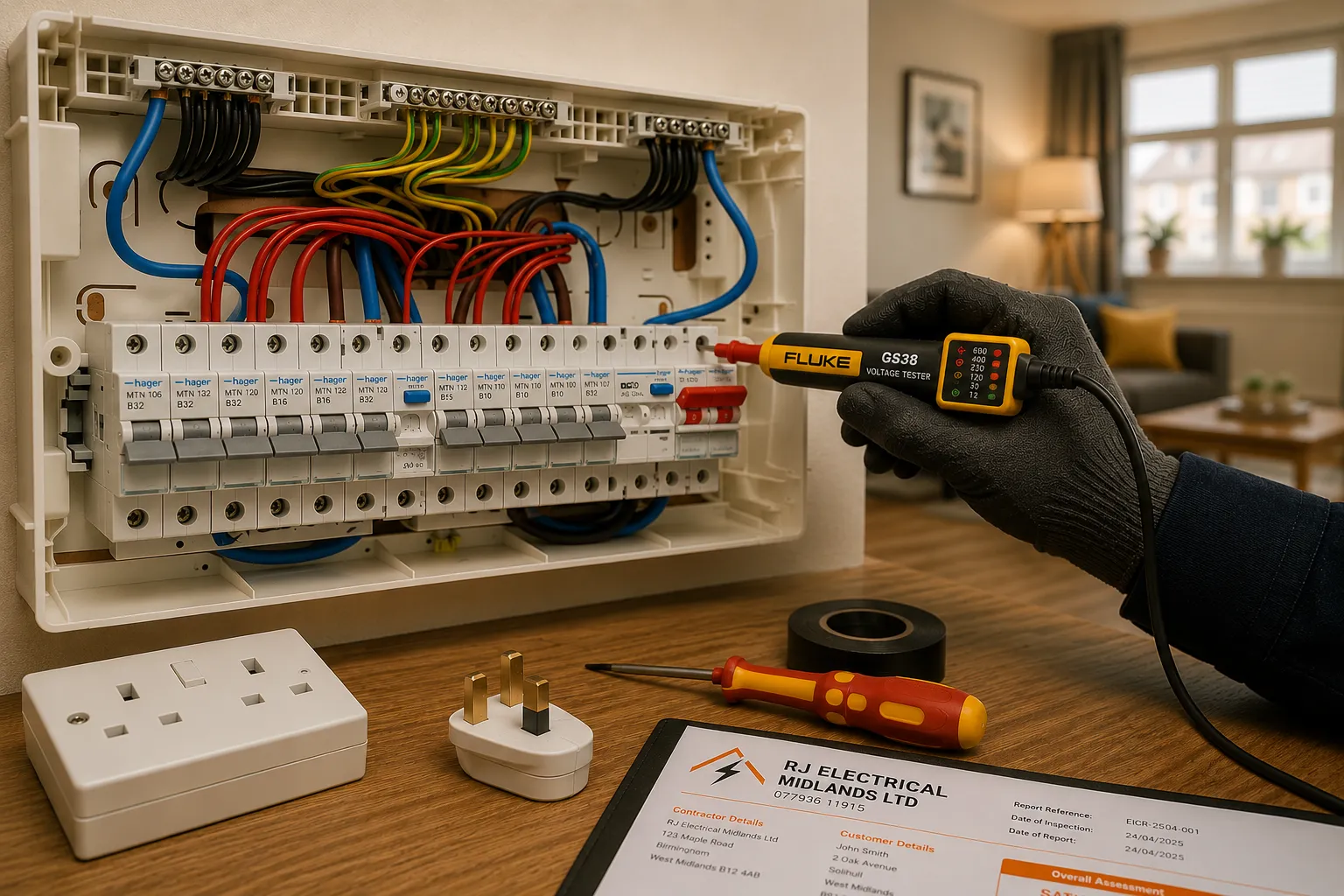
Arrange EICR Remedial Work in Nottingham
An unsatisfactory EICR is a warning that action is required, but it does not need to become a prolonged compliance problem.
RJ Electrical Midlands Ltd can review the report, explain the observations and provide appropriate remedial electrical work for commercial properties and landlords in Nottingham and the wider Midlands.
Explore the company’s commercial electrical services or arrange an assessment through the commercial EICR and landlord certificates page.
Frequently Asked Questions
What causes a property to fail an EICR?
A property receives an unsatisfactory EICR when C1, C2 or FI observations are recorded. These classifications identify immediate danger, potential danger or an issue requiring further investigation before the electrical installation can be confirmed safe.
Is a C3 code an EICR failure?
No. A C3 code means improvement is recommended, but it does not make the report unsatisfactory by itself. Completing the recommendation may improve safety, reliability or compliance with current standards and should still be carefully considered.
How quickly must EICR faults be repaired?
For covered rented homes in England, remedial work is normally required within 28 days or sooner if stated in the report. C1 dangers demand immediate action, regardless of the maximum period available under landlord regulations.
Can tenants remain in a property after a failed EICR?
That depends on the defects and whether affected circuits can be made safe. Immediate dangers may require isolation or urgent repairs. The electrician and landlord should assess occupancy carefully and prioritise tenant safety throughout remedial work.
Does an unsatisfactory EICR require a complete rewire?
No. Many failures can be corrected with targeted repairs or upgrades. A full rewire may be necessary when wiring is extensively deteriorated, several circuits are unsafe or repairing individual defects would not provide a reliable solution.
Who can complete EICR remedial work?
Remedial work should be carried out by an electrician competent for the installation and work involved. They should test completed repairs and provide appropriate certification or written confirmation showing how observations from the original report were resolved.
Can a business stay open after failing an EICR?
It may remain open if immediate risks are controlled and safe areas can continue operating. C1 hazards must be addressed immediately, while other work should be planned promptly with a qualified commercial electrician and documented properly.