



The Best Lighting Options for Gardens and Outdoor Spaces
Introduction
From pathway lighting to feature illumination, discover how the right outdoor lighting can transform your garden all year round.
Your garden does not have to disappear when the sun goes down. The right lighting can make paths easier to follow, create a comfortable place to sit and help you see who is approaching your home. It can also bring planting, trees and garden features into view from indoors during darker evenings.
The best approach usually combines several types of lighting, each with a clear purpose. If you are considering garden lighting in Nottingham, start with the areas you use most and build the design around them. At RJ Electrical Midlands Ltd, our garden and security lighting services help homeowners plan practical exterior lighting for their properties.


Start With How You Use Your Garden
Before choosing fittings, think about your usual route through the space. Do you cross the garden to a garage? Are there steps beside the patio? Would you like to eat outdoors, or simply enjoy the view from your kitchen?
Identify three priorities: routes that need visibility, places where you spend time and features you want to highlight. This helps prevent a common mistake: installing one powerful light that leaves some areas glaringly bright and others difficult to see.
Plan lighting alongside landscaping where possible. Agreeing cable routes before paving or decking goes down can reduce disruption later. Allow for access to connections and drivers so maintenance does not require taking the garden apart.
Pathway and Step Lighting for Clearer Routes
Paths, entrances and changes in level are sensible starting points for outdoor lighting installation. Good positioning helps you see where you are walking without shining light directly into your eyes.
Low Level Path Lights
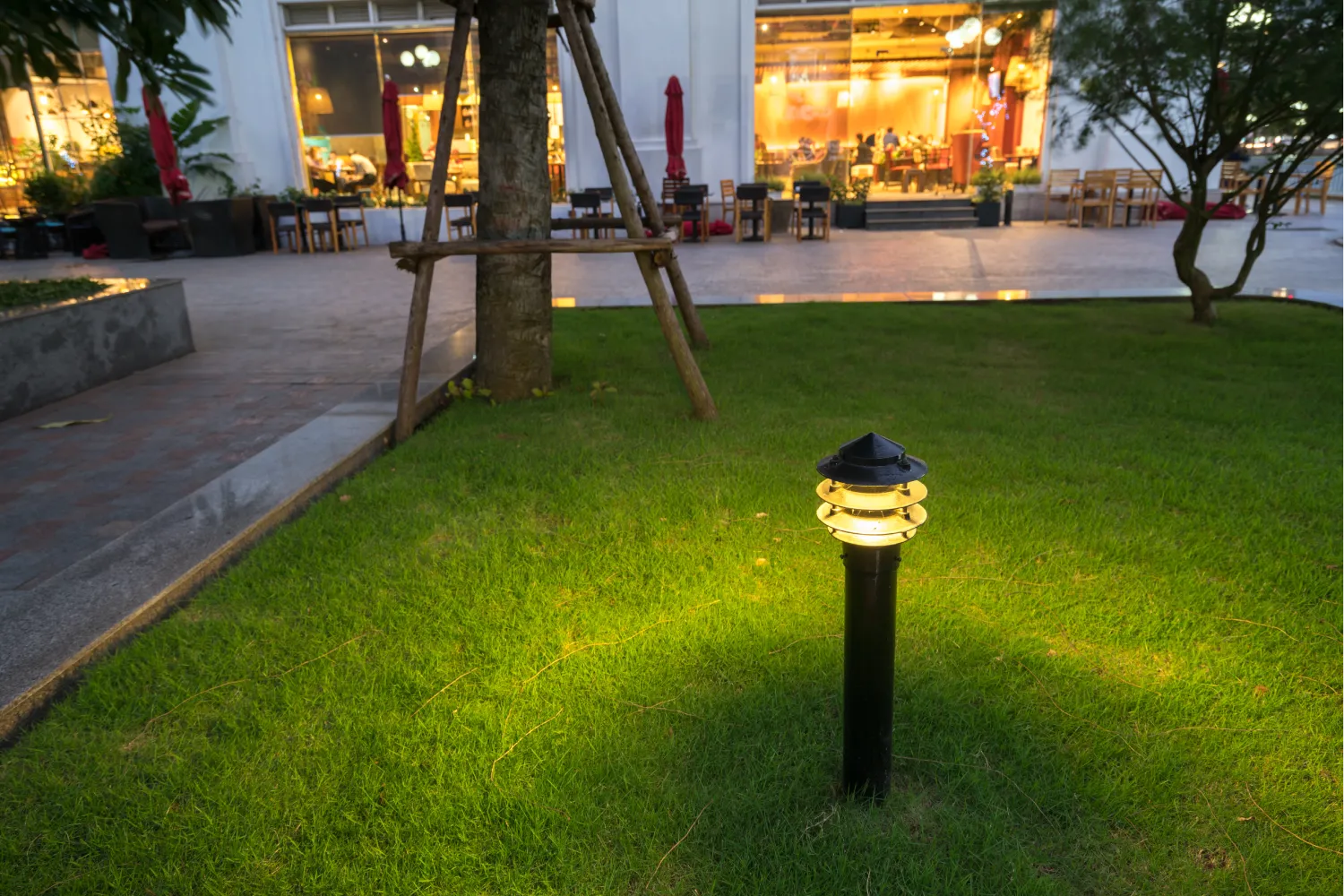
Bollards and shielded path lights can define the route between your house, gate and outbuildings. Choose fittings that direct light towards the walking surface. The aim is to show the route clearly, rather than create a row of bright points at eye level when you sit down.
Recessed Step Lights
Small lights fitted into risers or adjacent walls can make individual steps easier to distinguish. Position them so the step edges remain visible without creating distracting glare. Your electrician can assess exposure to rain, drainage and the suitability of the proposed installation position.
Patio and Seating Area Lighting for Everyday Use
Lighting around a patio should feel comfortable when you are sitting at a table or relaxing with friends. A fitting that looks subtle from the lawn may shine directly into your face from a dining chair.
Wall Lights Beside Doors and Patios
Wall lights can provide useful illumination near back doors, outdoor seating and access routes. Shielded fittings help control spill, while adjustable fittings let you direct light where it is useful. Choose the position with doors open as well as closed to avoid awkward shadows.
Pergola and Festoon Lighting
Outdoor-rated festoon lights can create a softer setting above a seating area. Concealed lighting beneath a pergola beam can also work well where you want the illumination to be more noticeable than the fitting itself.
Check the suitability of the complete system, including plugs, power supplies and connections. Indoor decorative lights should not be used outside simply because they sit beneath a roof.
Landscape Lighting for Trees and Garden Features
Landscape lighting draws attention to selected parts of the garden after dark. A few carefully chosen focal points can give the space depth without lighting every border.
Adjustable spotlights can highlight textured walls, sculptures or planting. Tree lighting needs careful consideration of beam direction: keep illumination focused on the feature and limit spill into the sky, neighbouring windows and surrounding habitat. Mounting arrangements should also allow for growth and maintenance.
If you have a pond or fountain, ask for fittings specifically designed for the intended position. Equipment suitable for rainfall is not automatically suitable for submersion. Water feature lighting needs its own assessment of fittings, connections and supply arrangements.
Security Lighting Around Entrances and Side Access
Security lighting can improve visibility around gates, driveways, garages and side passages. Motion-activated fittings are useful where you want light when someone approaches, without keeping the area illuminated throughout the night.
Position sensors to cover the intended approach and adjust them to reduce unnecessary activation from passing traffic or moving vegetation. Aim the light downwards and keep it within your property as far as possible.
Brightness alone does not make a good installation. Controlled coverage helps people see more comfortably and reduces disturbance to neighbours. Where cameras are installed, check the lighting with the camera image after dark to identify reflections or overexposed areas.
Why LED Garden Lighting Is Worth Considering
LED garden lighting offers a broad choice of compact fittings, beam angles and light colours. It can provide the required illumination using less electricity than comparable older incandescent or halogen lighting, although actual consumption depends on the products and operating hours.
Warm white light often suits planting and seating areas. A colour temperature around 2700K can be a useful starting point, but compare samples where possible: the colour of paving, brickwork and foliage will affect the result.
Choose replaceable components where practical and check how drivers can be accessed. A fitting with a long advertised lifespan can still be inconvenient if a failed component requires extensive work to replace.
Solar or Wired Garden Lights
Solar lights can suit decorative touches where a power supply is difficult to reach. They are straightforward to position, but performance depends on sunlight, panel location, battery condition and the season. Shaded gardens and shorter winter days can limit their output and operating time.
A wired system offers more predictable operation for routes, entrances and regularly used seating areas. It also allows the lighting to be organised around suitable switches and controls. Some gardens benefit from wired lighting for essential areas and solar lights for occasional decoration.
Controls That Help You Use Lighting Efficiently
Separate controls make it easier to use only the lights you need. For example, you may want the route to the garage illuminated while keeping decorative lighting switched off.
Timers, daylight sensors and motion sensors can reduce unnecessary operation. Compatible dimmers let you adjust suitable fittings for different activities. If you prefer smart controls, check product compatibility, outdoor signal coverage and how you will operate the lights if the connection is unavailable.
Avoid leaving decorative lighting on all night. Focus light on occupied areas, limit brightness and keep darker areas around hedges and boundaries where possible.
Safe Outdoor Lighting Installation
Exterior lighting is exposed to moisture, changing temperatures and possible damage from gardening. The fittings, cables and connections all need to suit their location. An IP rating describes protection against solid objects and water, but the appropriate rating depends on the actual exposure and installation instructions.
A qualified outdoor electrician can assess the supply, circuit protection and cable routes before installation. RCD protection is an important safeguard for outdoor electrical equipment. Fixed wiring should be properly designed, installed and tested, with the relevant certification supplied.
If your existing supply needs attention, our internal and external lighting services provide a starting point for discussing the work. Garden electrical services should be planned as a complete installation, including any sockets or outbuilding supplies you also need.
Discuss Garden Lighting in Nottingham
Whether you want clearer paths, softer patio lighting or better visibility around entrances, a considered design can make your outdoor space more useful throughout the year.
RJ Electrical Midlands Ltd provides electrical services across Nottingham and the wider Midlands. Contact our team to request a quote and discuss suitable garden lighting options for your home. Call 07393 611 915 or email info@rjelectricalmidlandsltd.co.uk
Frequently Asked Questions
What is the best lighting for a garden?
The best combination depends on how you use the space. Path lights help define routes, wall lights suit entrances and patios, and spotlights highlight selected features. Separate controls let you adjust each area without illuminating the whole garden every evening.
Are LED garden lights expensive to run?
Running costs depend on total wattage, operating hours and your electricity tariff. LEDs typically use less electricity than comparable halogen lighting. To estimate consumption, multiply total watts by hours of use and divide by 1,000 to calculate kilowatt hours used.
Do I need an electrician to install outdoor lighting?
Solar and battery lights generally need no fixed wiring. For mains-powered garden lighting, use a qualified electrician who can assess the supply, select suitable equipment, protect cables and test the installation. This is particularly important around moisture and buried services.
Can outdoor lights stay outside throughout winter?
Lights designed for permanent outdoor installation can remain outside within their specified operating conditions. Suitability depends on the fittings, connections and exposure. Check manufacturer instructions and arrange repairs if you notice water ingress, damaged cables, loose fittings or repeated tripping.
Are solar lights suitable for year round garden lighting?
Solar lights can provide decorative illumination, but winter performance may be limited by shorter days, shade and battery condition. For entrances, steps and routes you regularly use after dark, consider a properly installed wired system for more predictable lighting operation.
Where should security lighting be positioned?
Position security lights to cover entrances, gates, garages and side access where visibility is needed. Aim beams downwards and adjust sensors to the intended detection area. Avoid directing light into neighbouring windows, public roads or cameras, where glare can cause problems.
documentation together with your electrical installation records.
How much does garden lighting installation cost in Nottingham?
The price depends on the number of fittings, cable distances, access, groundworks and condition of the existing supply. Controls and specialist features can also affect the work involved. Request an assessment and itemised quote based on your garden and priorities.